01 / Ocean observing · Research systems
Ocean Evidence Commons
Keep the evidence connected to the claim.
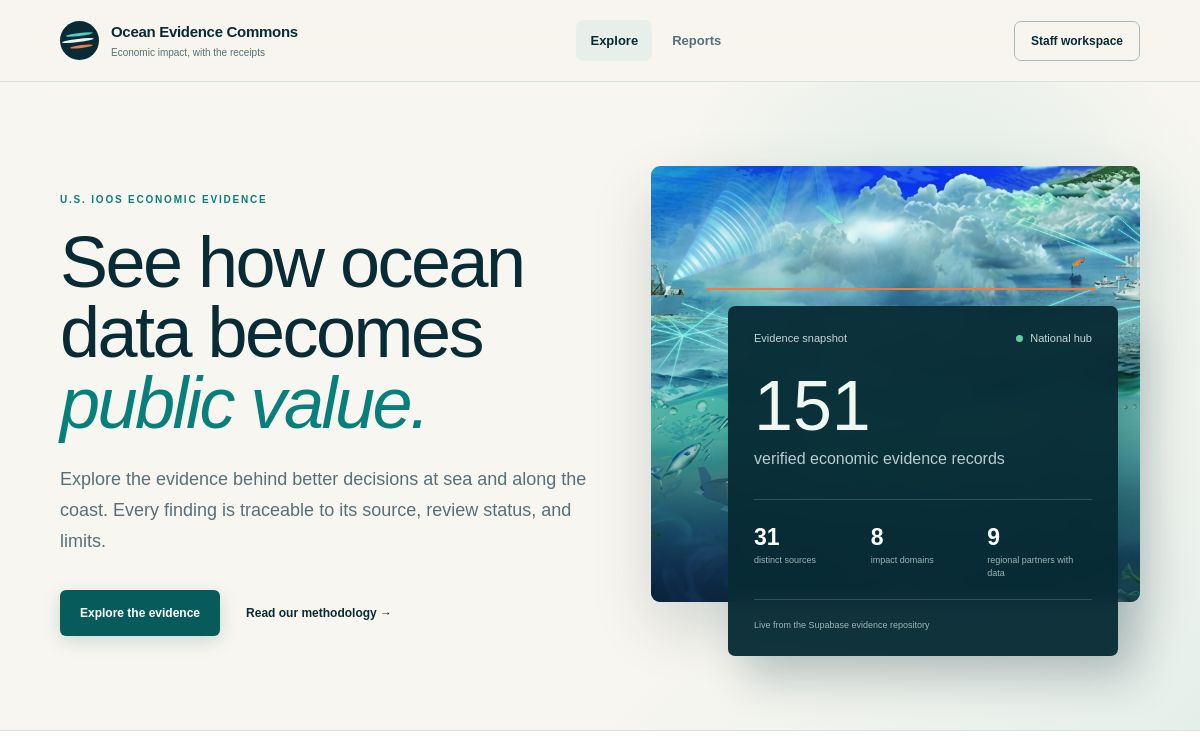
The decision
What can the evidence actually support?
Making the case for the Integrated Ocean Observing System means connecting findings across publications. A useful number comes with a method, a time period, an attribution question, and limits on what it can establish.
I built a shared research prototype to organize that work and make the path from a source to a claim easier to follow.
The friction
A collection of links is only a start.
When research moves between documents and briefing drafts, context can fall away. A modeled result can sound like an observed benefit; a broad economic estimate can be mistaken for value directly attributable to ocean observing.
The workflow gives source material, candidate findings, checked metrics, and claim wording separate places in the system.
What I built
Four steps, with distinct responsibilities.
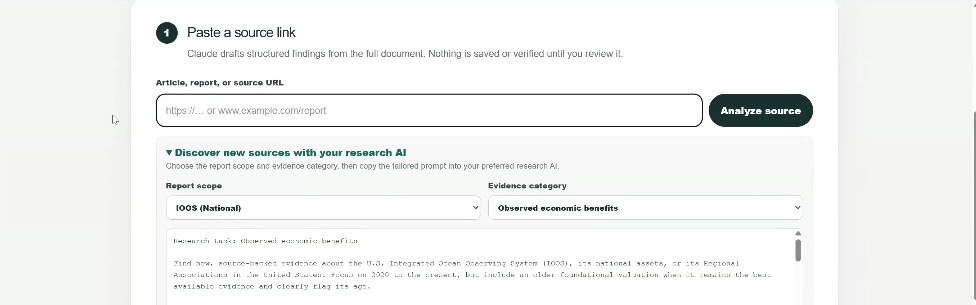
- 01 / Gather a sourceCollect the publication and its metadata. Assisted extraction can suggest candidate findings.
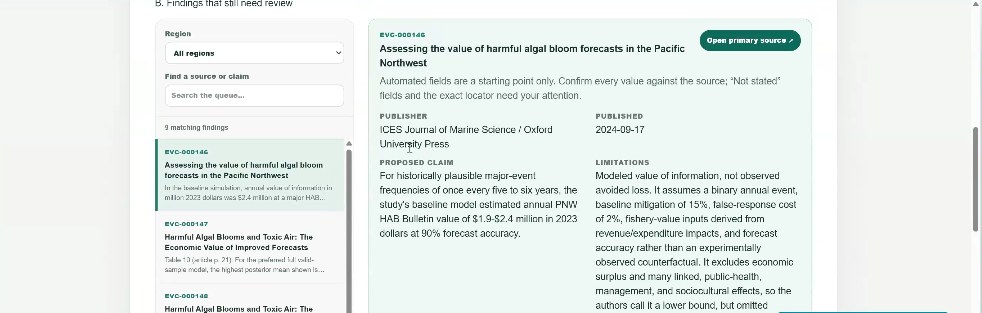
- 02 / Review the evidenceCheck the original source and record the locator, context, and verification notes.
- 03 / Check the metricRecord the value, unit, period, method, uncertainty, and attribution.
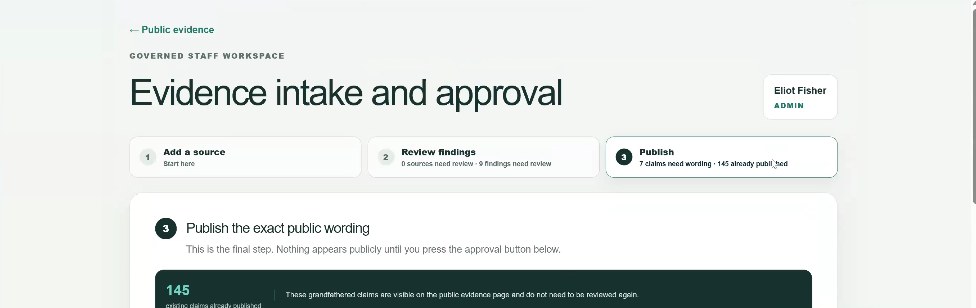
- 04 / Shape the claimWrite a usable statement that keeps the necessary caveat attached.
The prototype
From a public number back to its source.
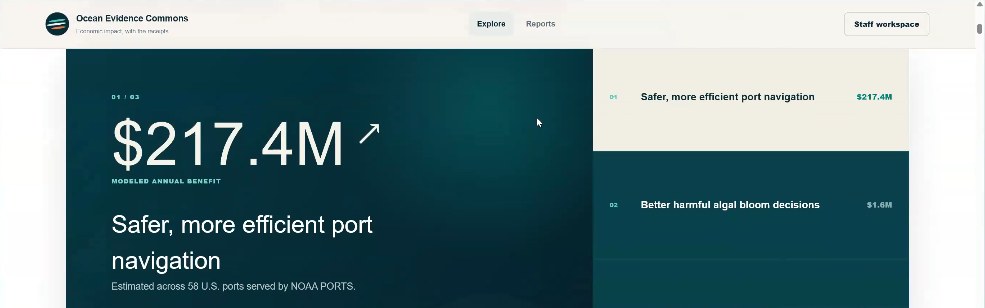
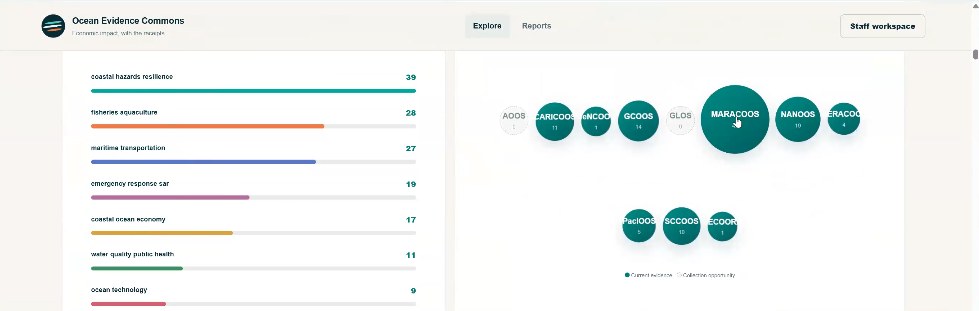
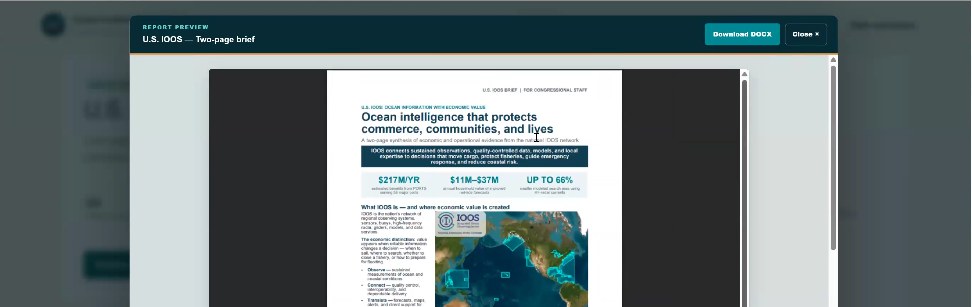
Screenshots of the working prototype, which is currently paused to avoid running costs. I’m happy to walk through a live demo.
An illustrative example
Preserve what “modeled” means.
A source describes a modeled reduction in a search area. The metric should retain that measurement basis, and the claim should describe the modeled result. It should not silently become a statement about observed dollars saved or lives saved.
This example explains the design principle; it is not a reported project outcome.
Current capability and limits
A useful foundation, still a prototype.
The application includes structured evidence intake, source review, metric validation, claim approval, and public exploration. AI suggestions support intake; they do not establish that a finding is correct.
The September source review identified differences between the intended review model and some public trust labels, legacy records, and approval checks. Briefing downloads are saved documents rather than automatically regenerated reports. Those limits matter when interpreting the prototype.
The next priority is to make public review labels and approval rules consistently reflect the underlying evidence, then connect report editions to the exact claims they use.
Explore further